Projects
Well London includes projects of two kinds: Heart of the Community Projects; and Theme Projects.
Heart of the Community Projects
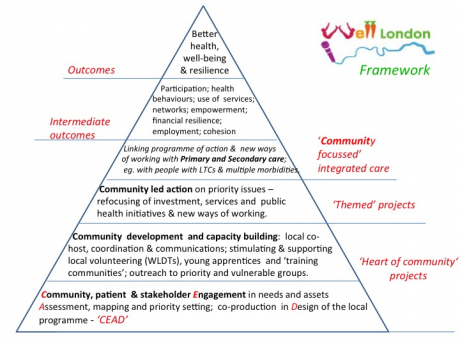
These are projects that deliver community engagement and capacity building by:
- increasing access to Well London projects and other health improvement opportunities and
- brokering changes in local service provision and activities to meet community need, as well as
- ensuring access to all sectors of the community to the theme projects.
Five Heart of the Community projects take place in each target area to support local organisations and help people gain new skills. These projects help people access local services and signpost them to local activities. They develop over the lifetime of Well London to reach out and involve the widest possible range of people in the area including older people, disabled people and all sections of the community.
- CADBE (Community engagement, assessment, design, brokerage, enterprise) - our ground-breaking research and evaluation framework.
- Youth.com - makes sure that children and young people are included in all aspects of the programme.
- Well London Delivery Teams (WLDT) - are teams of 5+ volunteers in each area trained to signpost people to healthier choices. In Well London phase one, some areas had teams 40 strong.
- Training communities - plans and delivers a variety of training for community members to support delivery of the other projects, and to develop new skills.
- Wellnet - a learning network for communities and professionals across all the projects and areas to share lessons learnt. Includes events, newsletters and case studies on this web site.
Theme Projects
In phase 1, eight Theme Projects focused on mental well-being, physical activity, healthy eating, open spaces, or arts and culture. Not all of them took place everywhere and the final mix of projects is based on the needs identified during the community engagement work. A Well London programme is not limited to these eight theme projects, but can be expanded to include other areas of interest such as employment, environment, or other health promotion themes.
The projects described below are based on the five original themes of the Well London programme:
Arts and Culture
- Be Creative, Be Well - used arts and cultural activity to help engage communities and individuals in a process of change around the other themes.
Healthy Eating
- Buywell - makes it easier to buy good quality, affordable and culturally sensitive food locally through influencing what's already there and setting up new schemes based on local need.
- Eatwell - increases rates of healthy eating and promotes a sense of community through celebrating good food and practical activities like cook and eat clubs.
Mental Health and Well-being
- DIY Happiness - uses humour, creativity and evidence emerging from the field of positive psychology to provide practical advice and information that increases people's ability to 'bounce back' from adversity, reduces both the physical and the psychological impacts of stress, increases resilience, and builds durable personal resources.
- Mental Well-being Impact Assessment - enables stakeholders to identify the potential impacts on mental well-being of their proposals/projects/programmes.
- Changing Minds - recruits and traisn local people with direct experience of mental ill health to deliver mental health awareness training in target communities. It empowers people to use their experience to help reduce the stigma and discrimination faced by many people with mental health problems and promotes understanding of mental health and well-being.
Open Spaces
- Healthy Spaces - physical improvements to the local environment that involve the local community in every step from planning to implementation complemented by structured programmes of activities.
- Active Living Map - uses GIS technology to produce web-based maps for each target area which draws together in a single resource a broad range of well being opportunities within easy reach of each community.
Physical Activity
- Activate London - increases physical activity levels through increasing the range of sports and active recreation activities available to the community through signposting existing opportunities and delivering new activities.